
Why continuity of care matters in NHS maternity care - and why many people experience the opposite
Why seeing the same midwife throughout pregnancy can make such a difference
When people imagine maternity care, they often picture building a relationship with a midwife who follows their pregnancy all the way through.
Someone who knows their medical history. Someone who understands their preferences. Someone they don’t have to explain everything to over and over again.
This is known as continuity of care - seeing the same midwife, or at least a small team of midwives, throughout pregnancy, birth and the postnatal period.
Research has continuously shown that continuity of care can help people feel more confident in their care, more comfortable asking questions, and more supported in decision-making.
When you see the same person regularly, conversations build over time. Advice feels consistent. And trust grows naturally.
Why continuity of care became a goal within NHS maternity care
The idea of continuity of care isn’t new, but it was recommended as a central ambition for NHS maternity services following the national maternity review: Better Births report in 2016.
This report set out a vision for maternity care that was safer, more personalised and built around relationships. One of it’s key recommendations was that women should experience “continuity of the person caring for them throughout pregnancy, birth and the postnatal period” rather than seeing a different professional at each stage.
You may have noticed this intention reflected in your own pregnancy care. At your “booking appointment” - you are assigned a “named midwife”.
The idea behind this is simple:
This midwife would ideally oversee your care, allowing you to build a relationship and providing a consistent point of contact throughout pregnancy.
For many people this sounds reassuring - and exactly how maternity care should feel.
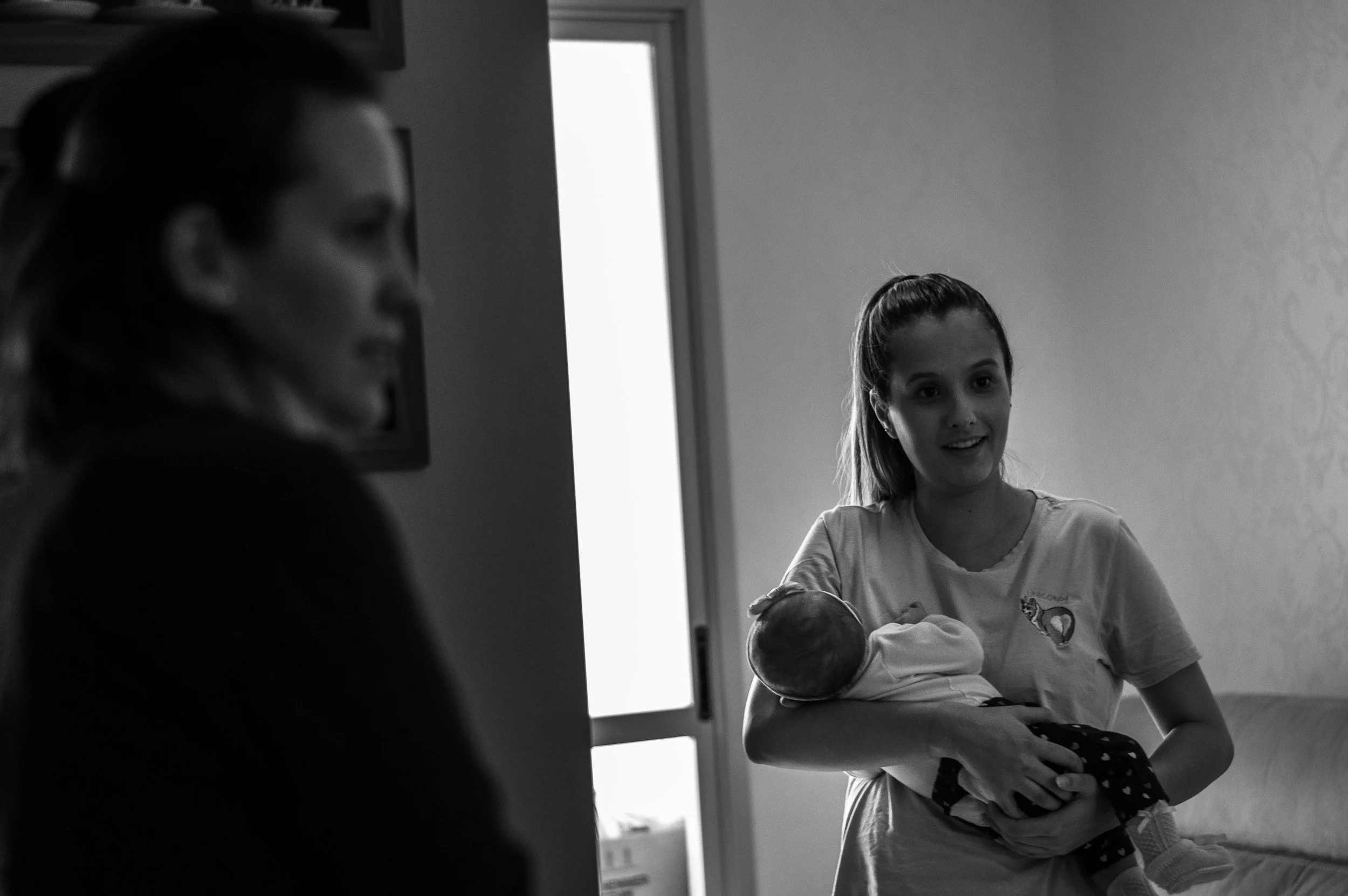
Image: continuity of care midwife pregnancy NHS
Why the reality often looks different
In practice, many people find that continuity of care doesn’t quite happen the way they expected.
You may see your named midwife once or twice.
Then, you begin seeing different midwives instead.
Each appointment starts with introductions again. You explain parts of your history again. Advice may feel slightly different each time.
This isn’t because midwives aren’t trying to provide continuity - after all, this can make their job more enjoyable too.
It’s usually because maternity services are managing large numbers of families, staffing pressures and complex rotas.
But when you’re the person experiencing it, the effect can still feel confusing.
Especially if you has expected to build a relationship with one familiar caregiver.
Some trusts/hospitals have been able to make continuity models work more successfully than others. For example in some areas - including parts of Bristol - people planning to give birth at home are supported by a small team of midwives who try to rotate antenatal appointments between two or three midwives. The aim is that, by the time labour begins, you are already familiar with the midwives who may attend your birth.
Unfortunately, this model isn’t available to everyone, which is why so many people still find themselves seeing a different midwife at almost every appointment.
Why this can make maternity care feel harder to navigate
When you see different midwives at different appointments, something subtle changes.
You may feel less confident asking questions.
You may wonder whether the advice you received last time still applies.
You may find yourself repeating information about your pregnancy again and again.
None of this means your care is necessarily unsafe. But it can make maternity care feel less predictable - and predictability is something that helps many people feel steady during pregnancy.
If you’d like to understand more about how maternity care is structured and why experiences like this can occur, you can read more here.
Small things can help you manage this:
While you can’t control staffing structures within NHS maternity services, there are small steps you can take to make navigating this easier.
I often recommend to my doula clients to keep their own simple records of appointments - noting who they saw, what was discussed and any decisions that were made.
This helps you feel more in control of your care throughout pregnancy as your care unfolds. It’s particularly helpful if there are discrepancies in your maternity notes - which can be a by-product of seeing many different caregivers in pregnancy.
It also makes it easier to share information with the next midwife you see, rather than relying on memory alone.
You can also request to see your named midwife and have appointments scheduled for when they are due to be working.
In another scenario, some people don’t find they gel particularly well with their named midwife. You can also ask to have your midwife changed.
Many people assume they can’t request this, but it often is possible and sometimes a simple solution.
Even occasional continuity can help you feel more anchored within your care.

Image: continuity of care midwife NHS
Continuity of care is about more than convenience
Continuity isn’t just about familiarity.
It’s about understanding.
When someone knows you, your pregnancy, and the conversations you’ve already had, decisions feel clearer and communication becomes easier.
When continuity isn’t possible, understanding how the system works can still help you feel more oriented within it.
And that clarity can make a meaningful difference to how you experience pregnancy care.
This is something many families need support navigating
Supporting families to understand how maternity care actually works - including why continuity sometimes breaks down - is a central part of my work.
Together, we focus on building communication skills so you feel comfortable asking questions, understanding how decisions are made, and developing the confidence to navigate maternity care even when things don’t feel straightforward.
You can find out more about my services here.